
We are quite proud of the class of 2012 graduates from computer science!

Back, left to right: Andrew Bennett, Joey Brown, David Margolies, Charles Gould, Mike White
Front (left to right): Camille Cobb, Anna Pobletts

A view of the world from the fourth floor of Parmly Hall
We are quite proud of the class of 2012 graduates from computer science!
Congratulations to Joey Brown ’12 for being named March General of the Month. The official W&L story.
Sandy Hausman from WVTF reported a story about women in computer science at Washington and Lee. The story features Professor Sara Sprenkle and students Camille Cobb ’12 and Cory Walker ’15.
The Ring Tum Phi has picked CSCI 251: iPhone Application Programming as #5 in its list of Top Ten Wildest Spring-Term Courses. We landed halfway between Music 101: Physics & Perception of Music (#10) and Chemistry 155: Science of Cooking: Italy (#1, an obvious choice).
The Computer Science Department is having a t-shirt design competition!
Rules (subject to change):
Submission (subject to change): Send the images (in some commonly used format, like jpg, png, tiff) to Sara Sprenkle (sprenkles@wlu.edu). Include explanation, if necessary, such as which image is on the front and which is on the back.
Please let us know if you have any other ideas/suggestions.

Camille Cobb ’12 was a finalist in the ACM Student Research Competition held at SIGCSE 2012 in Raleigh, NC. Camille presented her poster on “Exploring Text-Based Analysis of Test Case Dependencies of Web Applications” in a four-hour session to unknown judges, which placed her in the top five student researchers. She gave a well-received 12-minute presentation two days later with tough competition–by all accounts, the finalists were all very strong.


Andrew Danner, Ph.D., of Swarthmore College will talk about his work on developing efficient techniques to process large GIS data sets–a topic of interest to both computer scientists and geologists.
Monday, January 30 at 11:15 a.m.
Parmly 307 in the Science Center
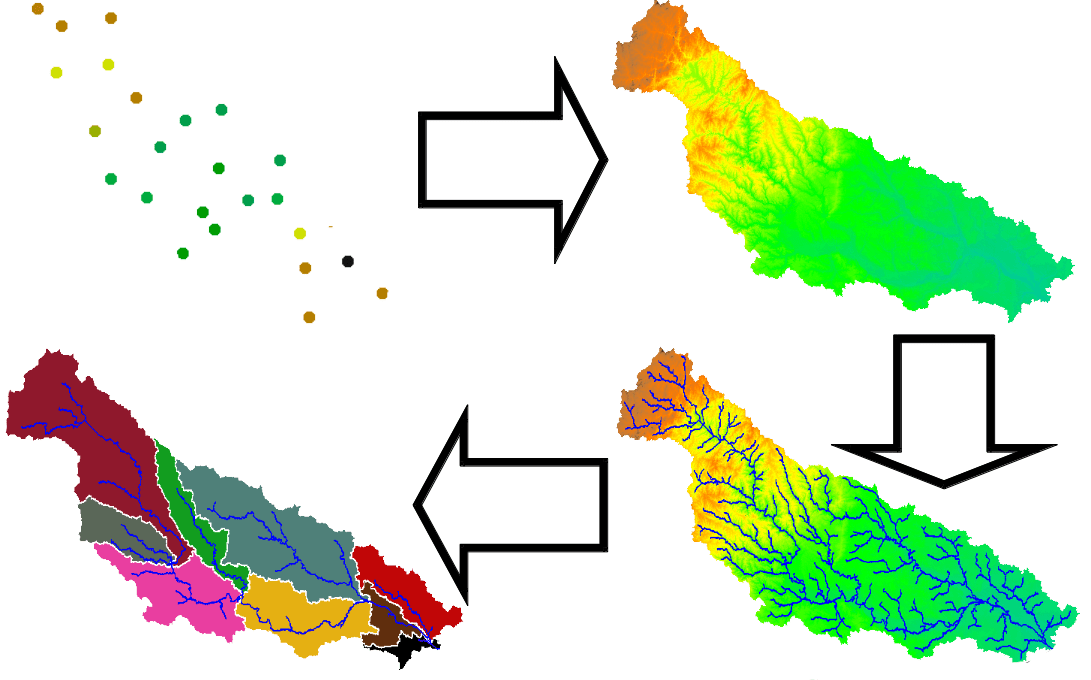
Abstract: Modern remote sensing and mapping technologies generate Geographic Information Systems (GIS) that often exceed several Gigabytes or Terrabytes in size. Processing such huge data sets poses a number of computational challenges. Portions of the data must reside on large but slow hard disks, while computation can only occur in the smaller but faster internal memory of modern computers. In these cases the transfer of data between disk and main memory becomes the primary bottleneck rather than internal CPU computation.
This talk will describe the I/O model of computation in which we can develop scalable algorithms for processing large data sets. I will also present TerraStream–an implementation of several I/O-efficient algorithms for processing large point clouds of elevation data, creating digital surface models, extracting river networks, and constructing watershed hierarchies. TerraStream performance scales efficiently to input data sets containing over 300 million points and over 20GB in size.


