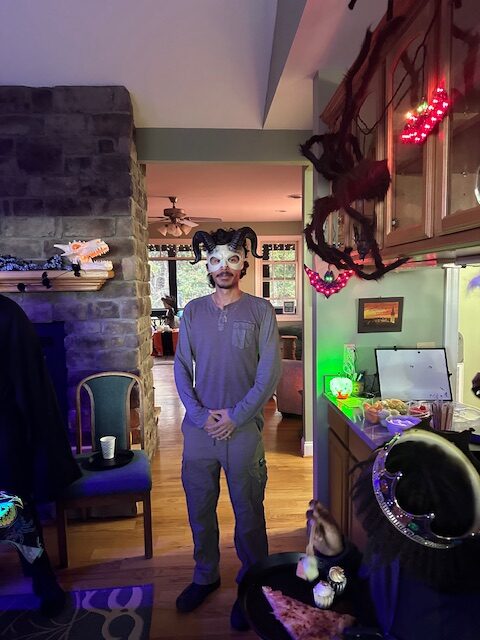
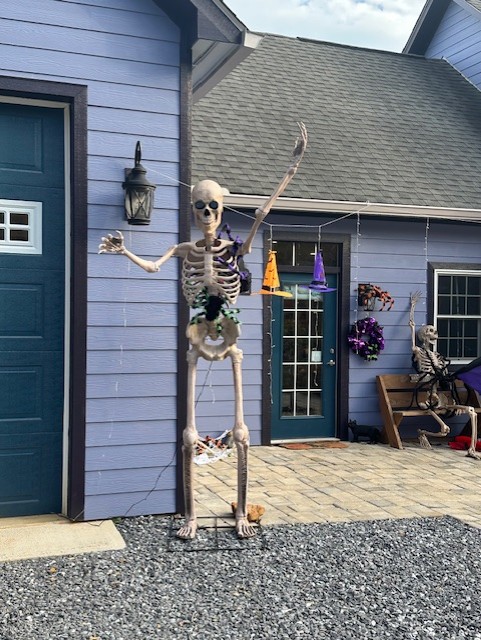
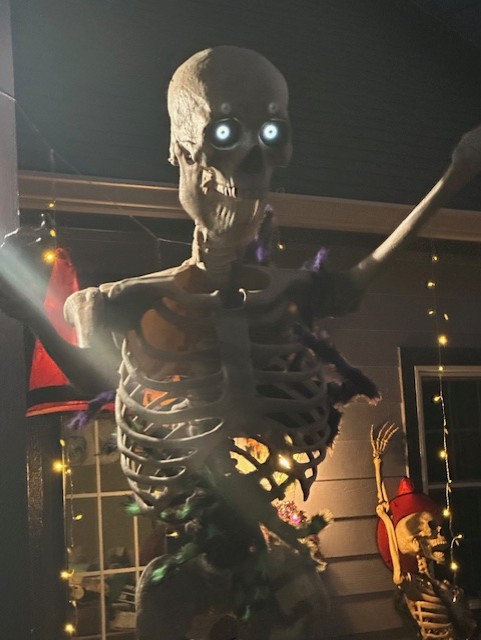
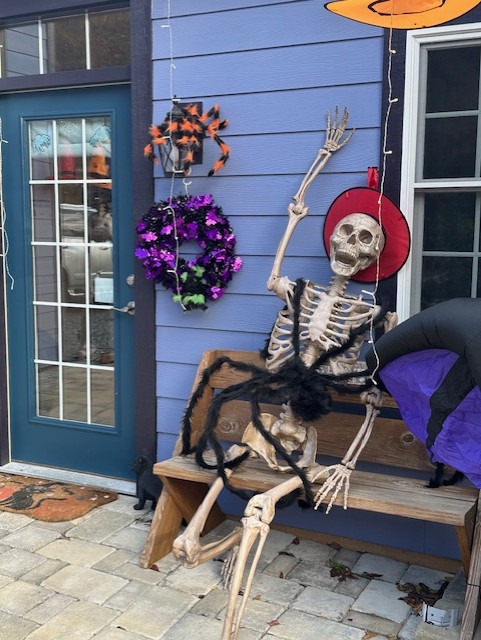
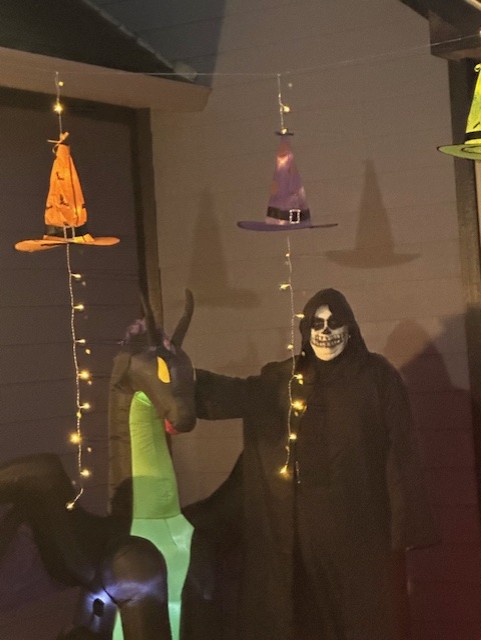
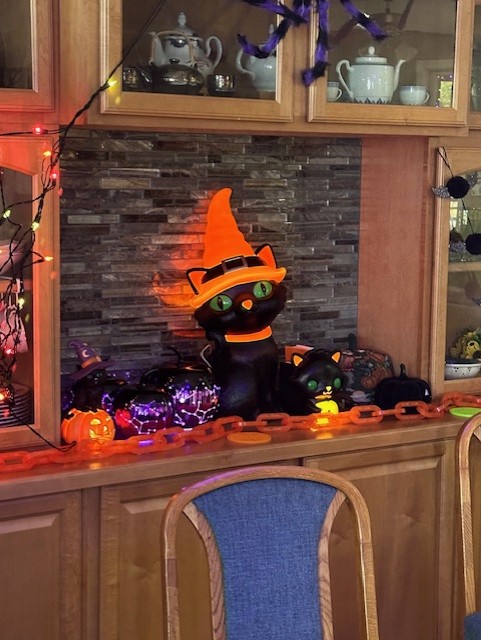
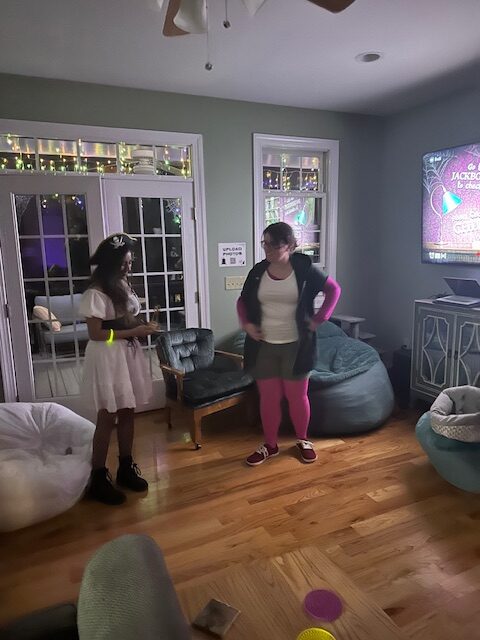
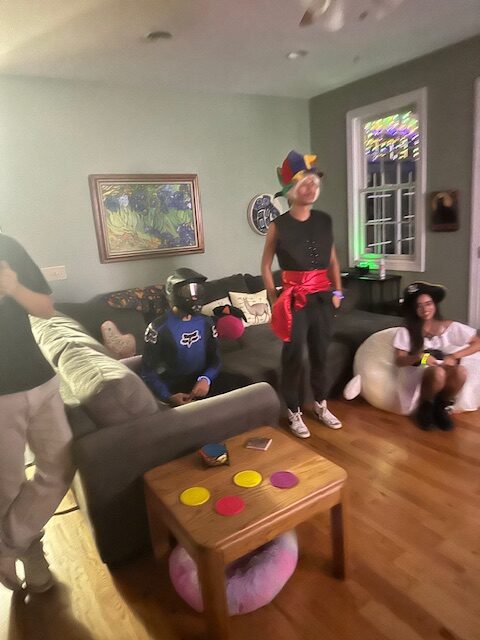
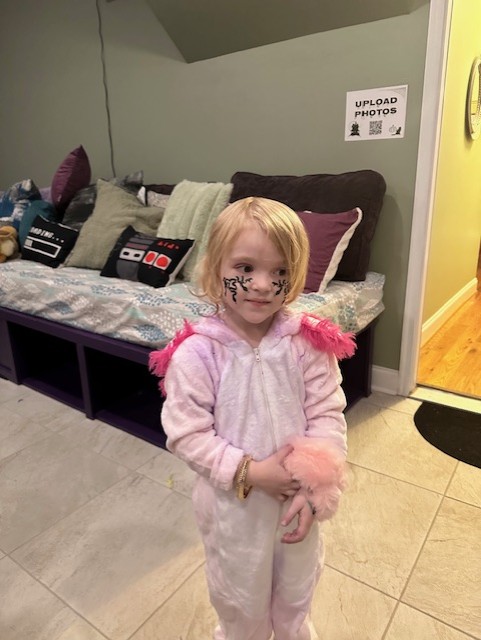
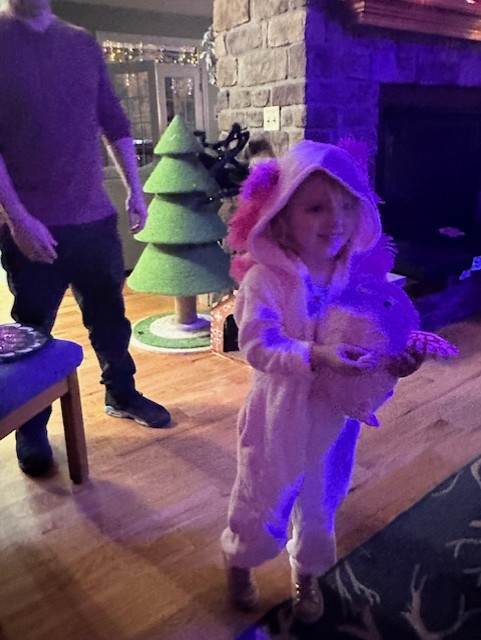
The Computer Science Department celebrated Halloween in style at Professor Matthews’ home on Thursday, October 29. Professor Matthews had awesome decorations and treats — it was an evening of fun, food and good company.
On September 26 and 27, William & Mary hosted &hacks XII, a 24-hour event where students team up to build software projects from scratch. Bringing together over 270 students from seven universities, this year’s event challenged participants to create new technologies based on the theme of “Imagination.”
Students spent the fast-paced weekend creating apps and tech solutions for real-world challenges while building AI and coding skills through hands-on workshops.
Washington and Lee students brought home multiple awards!
DiatoMeter (Aditya Thakur ’30, Menilik Deneke ’28, and Damir Syrlybayev ’29) earned Gold in the Nano Bio Lab track as a tool that helps analyze microscopic biological samples more quickly and accurately.
Lingo (Paula Yaniz Macia ’28, Anh Nhu’28, Danilo Sindric ’29, and Devin Upadhyay ’29) earned Silver and the Best Use of ElevenLabs award for building an AI-powered language-learning tool designed for ESL learners to master spoken English pronunciation and linguistics.
Psst (listed on Devpost as Accountability App), developed by Connor Sweeney ’27, earned Silver for developing an AI accountability app that helps users stay on track with goals and habits.
A big congratulations to all the W&L students on their impressive success at the hackathon!
On Tuesday, May 5, students and faculty from the Computer Science Department gathered outside for the annual lunchtime picnic—a breezy, sunny break from the usual routine.
Yard games were a big draw, with giant Jenga, interactive Tetris, and a Coney Island toss game!
The picnic was a chance to relax, catch up, and spend time together outside of class, making it another fun and relaxing department tradition.
On Saturday, April 11, the Great Hall hosted Game Demo Day, an exciting display of student innovation and design.
Students from Professor Liz Matthews’ Computer Science 319: Video Game Design course presented their final game projects, the culmination of a semester of hard work, problem‑solving, and imagination.
Visitors were invited to do more than just watch—they were encouraged to play the games themselves, interact with the student developers, and learn about the design process behind each project. The event provided an interactive environment for students to present their work to the campus community.
Game Demo Day 2026 was a fun and successful celebration of student creativity and game design.
The Computer Science Department’s annual Halloween Party took place on October 30, 2025, at Professor Matthews’ house—and it was a great success! Students, faculty, and friends enjoyed an evening of costumes, good food, and plenty of laughs.
Here are a few photos from the night—thanks to everyone who joined and helped make it a memorable event!
Yurechko, who double majors in computer science and philosophy and minors in poverty and human capability studies, has been named the 2024 Omicron Delta Kappa (ODK) Leader of the Year in academics and research.
The Omicron Delta Kappa (ODK) Leader of the Year in academics and research recognizes individuals who have demonstrated exceptional leadership qualities and achievements in the area of academia and research within their academic community or institution.
A 2023 initiate of the University’s Alpha Circle of ODK, Katie will graduate in May 2024 with a 4.0 GPA. She was also named W&L’s first Marshall Scholar in December 2023.
The first ever W&L SOLVE Hackathon was held in the IQ Center, May 12-13, 2024.
A hackathon is an event where individuals or teams come together to collaboratively work on solving problems or creating innovative projects within a limited time frame. The SOLVE 2024 event was an interdisciplinary student-focused gathering for any undergraduate student from W&L.
A grand prize of $1,000 was awarded to three separate teams judged to have created the best products or for embodying the spirit of the competition. Danish Bokhari ’24, Lakpa Sherpa ’25 and Mohamed Soliman ’27, who created EcoEats, a food app designed to revolutionize the way we eat and live sustainably, were one of the three winning teams.
On November 2 , the Computer Science Department held its first ever Capture the Flag event.
Capture the Flag (CtF) in computer security is an exercise in which participants attempt to find text strings, called “flags”, which are secretly hidden in purposefully-vulnerable programs or websites.
From unraveling cryptic codes to identifying vulnerabilities in simulated systems, student teams showcased their skills in ethical hacking and digital defense. CS’s CtF served to foster a dynamic cybersecurity community on campus.
The success of this initial session set the stage for future exciting and intellectually stimulating CtF competitions!
Professor Tolley explains the rules, while Professor Khan looks on.